
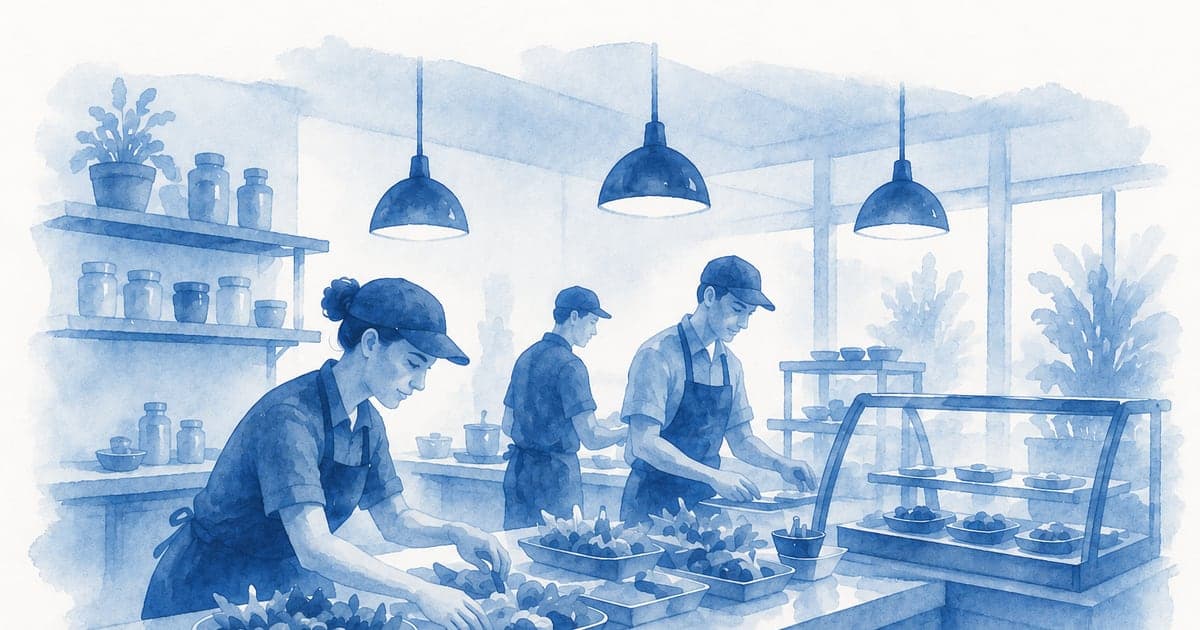
Key takeaways
- A reliable workplace food program behaves like an operating system, not a rotating list of vendors.
- The right service model depends on headcount, space, schedule, culture, and how much coordination your team can realistically own.
- Food service becomes easier to trust when kitchen, delivery, staffing, replenishment, and issue recovery are accountable to one partner.
Workplace food is often treated as a collection of separate tasks: lunch, pantry, coffee, catering, feedback, invoices, and emergency fixes. In practice, those tasks are connected. When one layer breaks, the whole experience feels fragile.
A better program starts by designing the system around the workday and then building the service layers that support it. That is the difference between food as a perk and food as an operating layer.
Start with the workday, not the menu
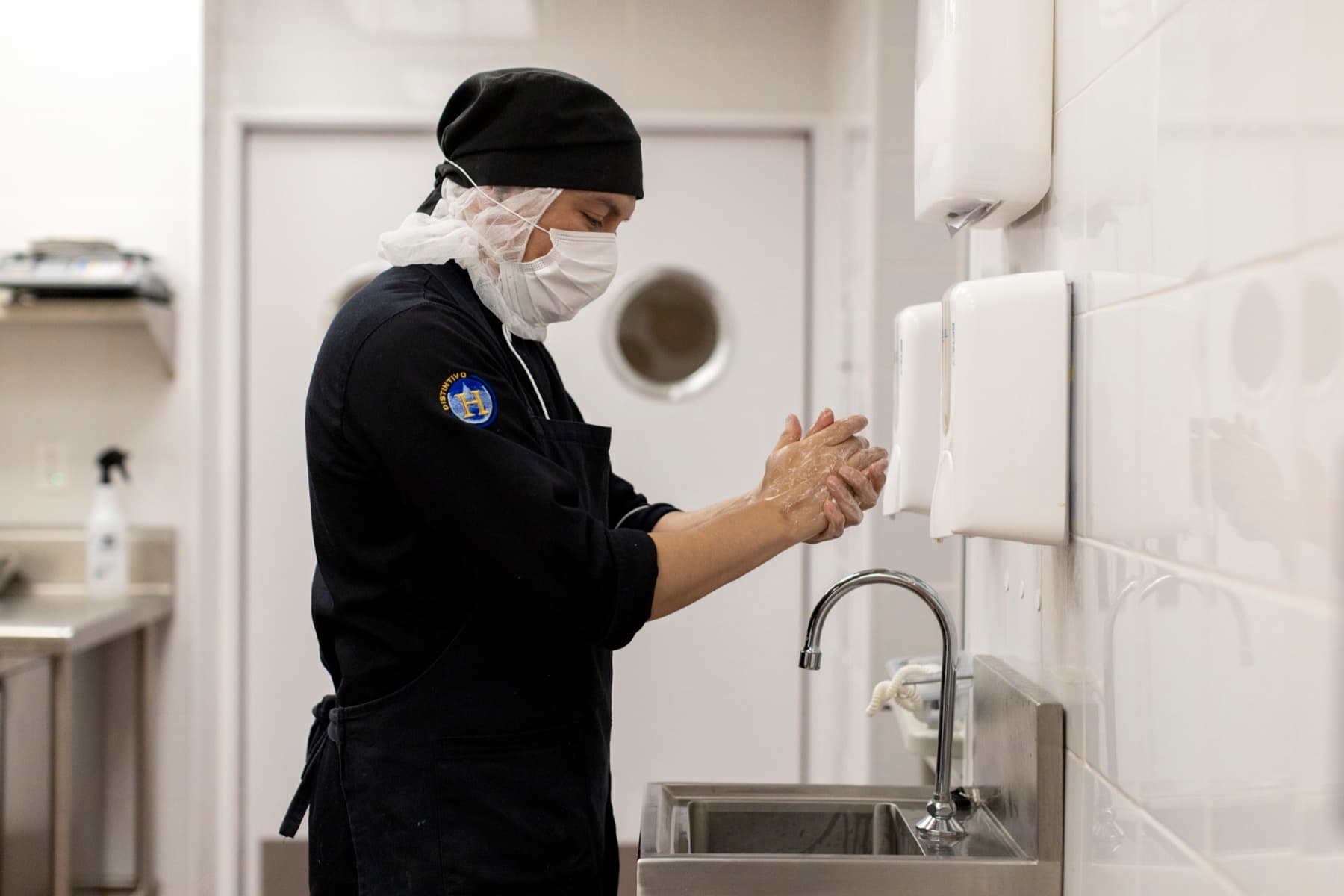
The strongest workplace food programs begin with the rhythm of the office. Arrival times, meeting blocks, hybrid schedules, production windows, and team rituals all shape what food service needs to do before anyone chooses a dish.
Menu planning matters, but it should come after the operating brief. If service starts late, replenishment is unclear, or the cafe line stalls before an all-hands, even a thoughtful menu becomes a daily source of friction.
Choose the right service model
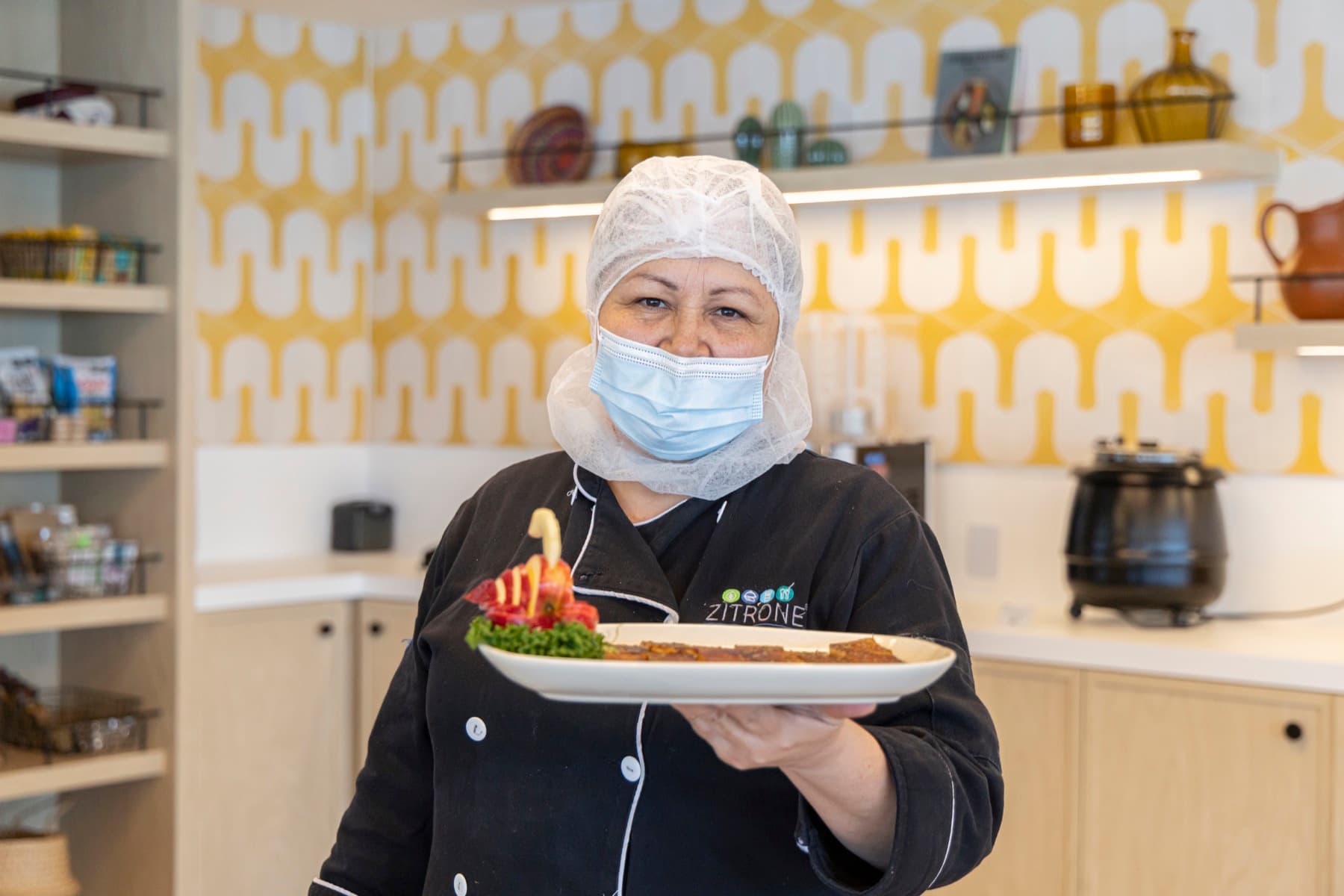
Some teams need commissary-prepared meals delivered with a clean service window. Others need an on-site cafe, pantry restocking, coffee and water, or catering that flexes around trainings and client visits.
The useful question is not which service is most impressive. It is which mix of services removes the most operational drag while matching the size, space, and culture of the organization.
Build the operating rhythm
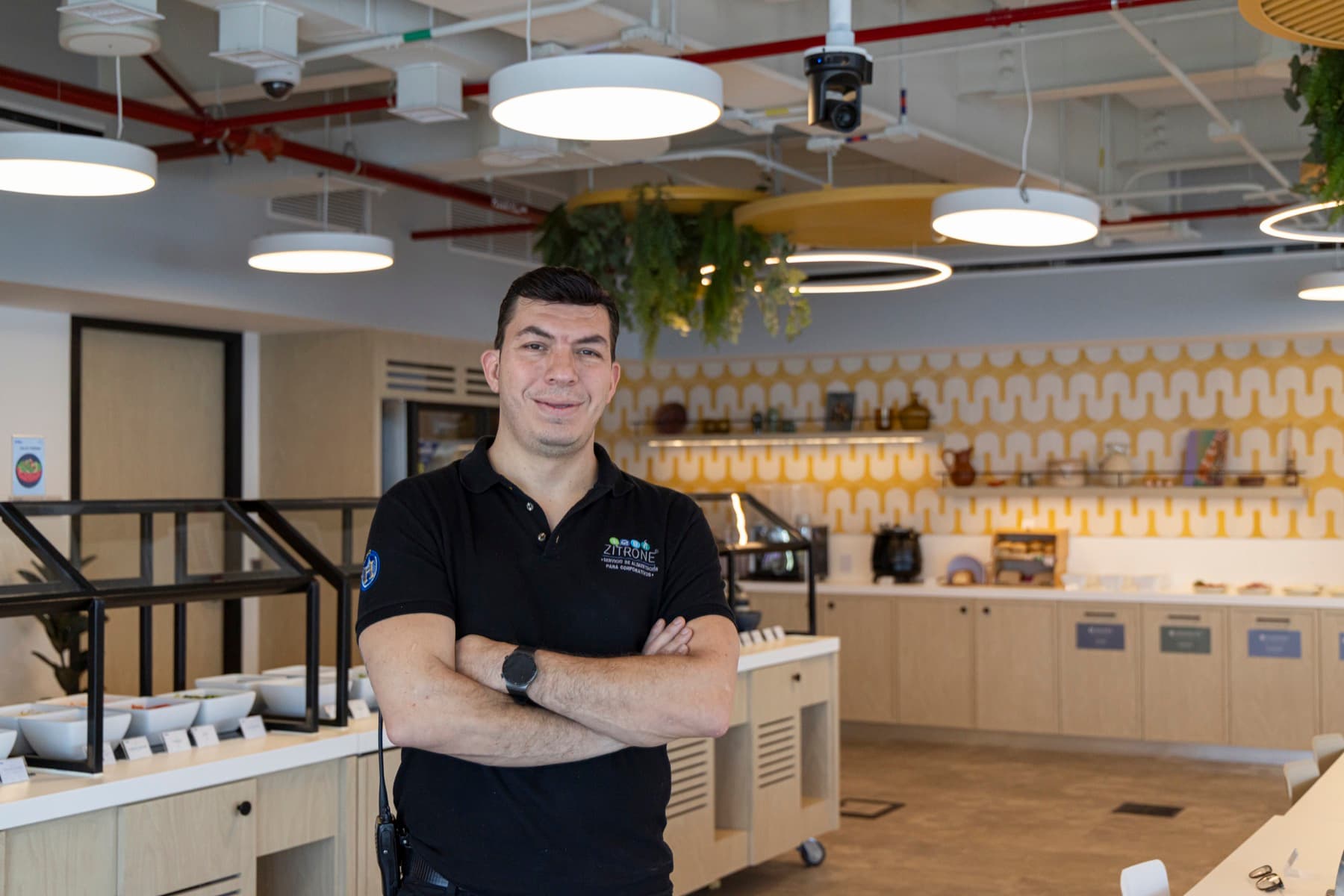
Once the model is clear, consistency comes from cadence: ordering, production, routing, setup, service, replenishment, cleanup, reporting, and adjustment. Each layer needs an owner and a recovery path.
This is where a single operating partner changes the experience. Instead of asking an office team to coordinate the seams, the partner owns the system and keeps the service moving from commissary to table.
Measure, learn, and adjust
Food programs are living systems. Utilization, preference shifts, waste, service timing, pantry velocity, and feedback should inform the next cycle instead of sitting in a report no one uses.
The goal is not a rigid program. It is a reliable one that can adapt without creating vendor surprises, logistics gaps, or single points of failure.
The bottom line
A workplace food program works when people enjoy it and operations teams do not have to chase it. That requires thoughtful menus, but it also requires infrastructure, staffing, delivery discipline, food-safety controls, and clear accountability.
When those pieces are coordinated from one place, food shifts from a daily logistics burden into a managed operating layer.
#zitroneoperations
Find the right Zitrone program to turn food logistics into operational confidence.
Contact usFrequently asked questions
Topics
- Workplace food
- Operations
- Daily dining
- Service model
- Food safety